















Tattoo Machine Voltage Guide: Settings, Techniques & Best Practices for Artists
Introduction
Voltage is the invisible force that determines the success or failure of every tattoo. Too high, and you risk traumatizing the skin and causing excessive bleeding. Too low, and your ink won't saturate properly, leaving patchy, faded results that require touch-ups. For both apprentice tattoo artists and seasoned professionals, understanding voltage settings is fundamental to creating clean lines, smooth shading, and vibrant color work.
This comprehensive guide breaks down everything you need to know about tattoo machine voltage. You'll learn the optimal settings for different techniques, how to adjust voltage based on skin type and needle configuration, and how to troubleshoot common problems. Whether you're working with a traditional coil machine, a modern rotary, or a pen-style device, mastering voltage control will elevate your work and ensure client comfort throughout every session.
Understanding Tattoo Machine Voltage Basics
What Is Voltage in Tattooing?
Voltage refers to the electrical pressure that powers your tattoo machine, measured in volts (V). Think of it as the force that pushes electricity through your machine's motor or coils, determining how fast and powerfully your needles move. Higher voltage means faster needle movement and deeper penetration, while lower voltage produces gentler, slower needle action.
In practical terms, voltage directly affects two critical aspects of tattooing: needle speed and power delivery to your machine. While voltage doesn't directly control penetration depth (which is determined by your machine setup and hand technique), it does influence how effectively needles penetrate the skin. Higher voltage gives needles more force to overcome skin resistance, while lower voltage produces gentler needle action.
When you adjust the voltage on your power supply, you're controlling the needle's speed and penetration force, which affects how aggressively the needles enter the skin and how much trauma you inflict during the process. This makes voltage your primary tool for adapting to different tattooing techniques and client needs.
Voltage vs. Other Machine Settings
While voltage is the setting most artists adjust regularly, it's important to understand how it relates to other electrical properties. Amperage (measured in amps) refers to the actual flow of electrical current through your machine. Most tattoo power supplies regulate amperage automatically, but it affects how much power your machine can sustain under load.
Wattage is the total power consumption, calculated by multiplying voltage and amperage. Though rarely adjusted directly, wattage indicates your machine's overall power demand. For practical purposes, voltage remains your primary control because it's the easiest way to adjust machine performance in real-time. Most artists develop an intuitive feel for voltage adjustments, while amperage and wattage work behind the scenes to support consistent operation.
Optimal Voltage Ranges for Different Techniques
Lining Voltage Settings
Line work requires precision, speed, and consistent penetration to create clean, solid lines. Most artists find their sweet spot between 7.5 and 9 volts for lining, though this range varies based on several factors. Thicker lines using larger needle groupings may require voltage toward the higher end of this spectrum, while delicate line work with single or small groupings works better at lower voltages.
The goal with lining voltage is to achieve smooth, confident needle movement that penetrates the skin cleanly without excessive trauma. Your machine should sound crisp and consistent, with needles moving fast enough to prevent dragging or skipping. Start at 8 volts for standard line work with round liners, then adjust based on how the machine feels and how the skin responds.
Shading Voltage Settings
Shading typically requires lower voltage than lining, usually ranging from 6 to 8 volts. The slower needle speed allows for better control over ink saturation and produces smoother gradients. Soft shading and blending work best at the lower end of this range (6-6.5V), while more aggressive shading or whip shading might require 7.5-8V for proper ink deposit.
The key to successful shading voltage is finding the balance between enough power to saturate the skin and gentle enough movement to avoid overworking the tissue. Your machine should run quietly and smoothly, with a slight hum rather than the sharp buzzing sound of lining work. Pay attention to how easily ink flows into the skin—if you're having to make multiple passes, your voltage may be too low.
Color Packing Voltage Settings
Color packing sits between lining and shading in terms of voltage requirements, typically ranging from 7 to 9 volts. Vibrant color saturation requires enough power to drive pigment into the skin effectively, but not so much that you cause excessive swelling or blowouts. Brighter colors like yellows and whites often require slightly higher voltage than darker colors to achieve proper saturation.
When packing color, consistency is crucial. Set your voltage to maintain steady needle speed throughout each pass, adjusting upward if you notice the color appearing thin or patchy. Dense color packs, especially with magnum needles, generally work best around 7.5-8.5V, allowing you to build saturation without overworking the skin.
Black and Grey Work
Black and grey tattooing demands exceptional voltage control to create smooth transitions and subtle tonal variations. You'll typically work in the 6-8V range, adjusting frequently as you move from darker blacks to lighter greys. Solid black packing might start at 7.5-8V, while delicate grey wash work could drop to 6-6.5V for the softest gradations.
The technique of black and grey work requires constant voltage modulation. As you dilute your black ink to create grey tones, you may need to slightly reduce voltage to prevent overworking lighter shaded areas. Many artists develop a personal voltage map for their black and grey work, knowing exactly which settings produce their desired tonal ranges.
Factors That Influence Voltage Requirements
Needle Configuration
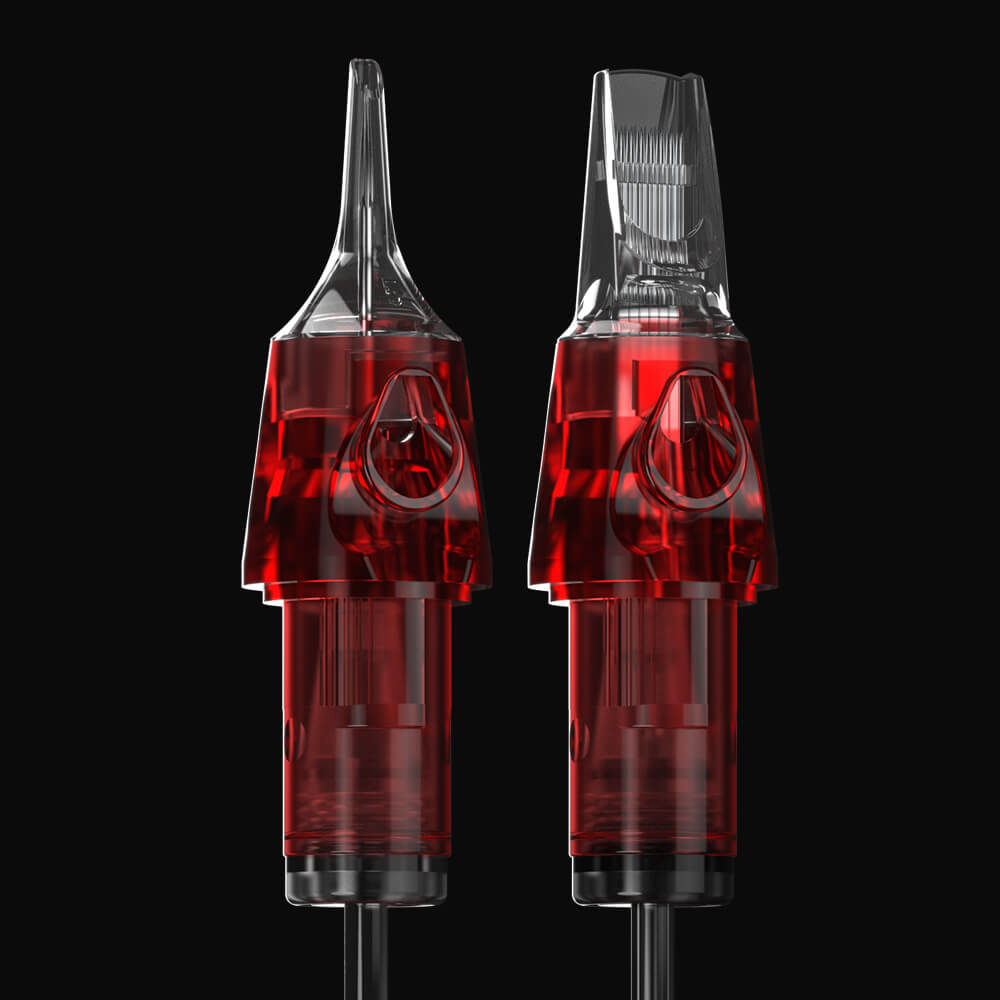
Your needle configuration dramatically impacts voltage needs. Single needles and small groupings (3-5 needles) require less voltage because there's less resistance and fewer needles to drive through the skin. Conversely, large magnum configurations (13-15+ needles) need higher voltage to maintain adequate speed and penetration across all needles.
Round shaders typically operate at lower voltages than round liners of the same size due to their intended softer application. Flat needles and magnums fall somewhere in between, with standard magnums requiring moderate voltage and curved magnums sometimes needing slight increases to ensure even ink distribution across their arc. Always test your needle setup before beginning work, adjusting voltage to match the configuration's specific needs.
Skin Type and Area
Different body areas and skin types require voltage adjustments for optimal results. Thin skin areas like the inner arm, ribs, or behind the ear need lower voltage to prevent excessive trauma and potential blowouts. Thicker skin on the back, outer arm, or thighs can handle higher voltage without adverse effects.
Skin texture also matters. Older, more weathered skin may require slightly higher voltage for proper ink saturation, while young, firm skin typically needs less power. Scar tissue, previously tattooed areas, and areas with heavy sun damage all respond differently to voltage, requiring artists to make real-time adjustments based on how the skin accepts ink.
Machine Type Differences
Coil machines, rotary machines, and pen-style devices all have distinct voltage characteristics. Traditional coil machines typically require higher voltage (7-10V) due to their electromagnetic operation and heavier needle impact. The distinctive buzz of a coil machine results from this higher voltage driving the armature bar's rapid movement.
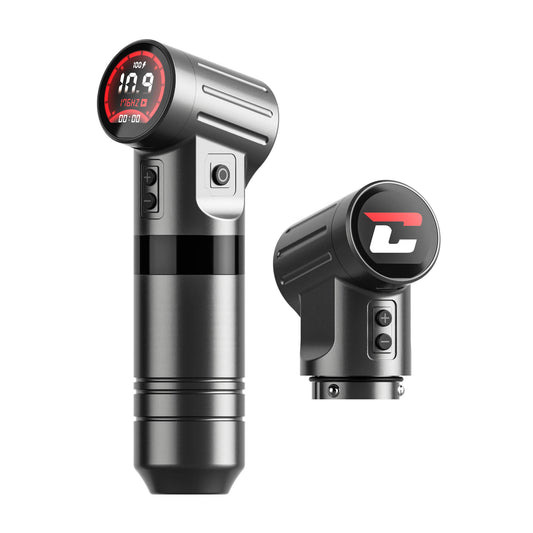
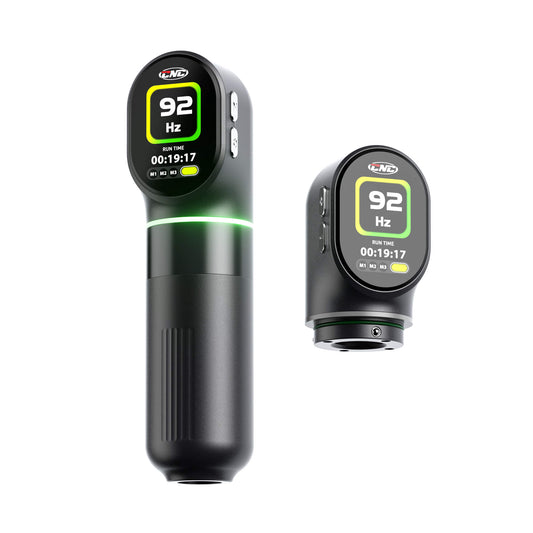
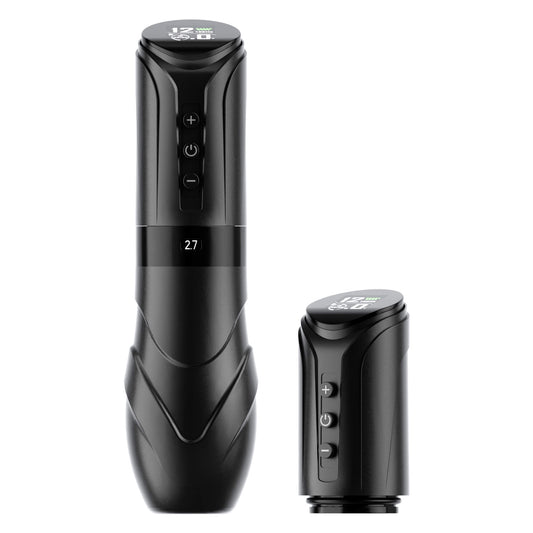
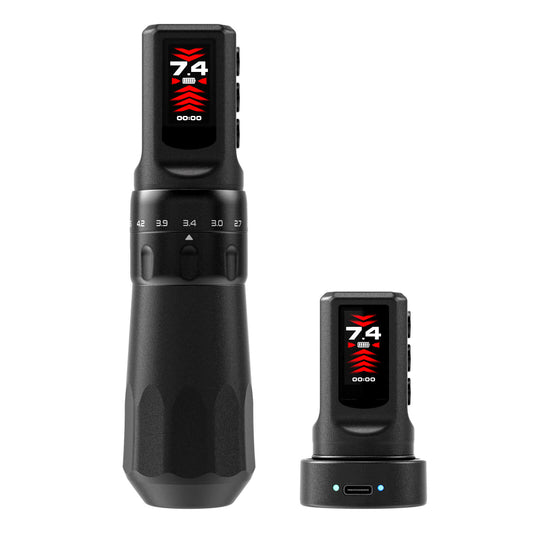
Rotary machines generally run more efficiently at lower voltages (4-8V) because their motor-driven mechanism produces consistent needle movement with less electrical resistance. Pen-style machines, being lightweight rotaries, often operate at the lowest voltages (3.5-7V), with their efficient direct-drive systems requiring minimal power. Always consult your machine's specifications and develop familiarity with how your specific equipment responds to voltage changes.
Power Supply Quality
Your power supply's quality directly affects voltage consistency and reliability. Digital power supplies offer precise voltage control with minimal fluctuation, displaying exact voltage readings and maintaining steady output throughout sessions. These supplies are ideal for artists who need repeatable settings and consistent performance.
Analog power supplies, while more traditional, can experience voltage drift during long sessions as components heat up. They're generally less precise but some artists prefer their tactile feel and smooth adjustment. Regardless of type, invest in a quality power supply from reputable manufacturers. Cheap supplies can deliver inconsistent voltage, leading to unpredictable machine performance and compromised tattoo quality.
How to Adjust Voltage During a Session
Starting Point Guidelines
Begin every session by testing your voltage on practice skin or during your initial stencil outlining. Start conservatively—it's always safer to begin with lower voltage and increase as needed rather than starting too high and causing unnecessary trauma. For most standard work, 7.5V serves as a reliable starting point that you can adjust up or down based on machine response.
Listen carefully to your machine's sound and feel its vibration in your hand. A properly set machine runs smoothly without excessive vibration or stuttering. Watch how the needles interact with the skin during your first few lines or passes. The ink should flow in cleanly without excessive bleeding, and the needles should penetrate consistently without dragging or jumping.
Fine-Tuning Your Settings
Fine-tuning happens in small increments, typically 0.1-0.3V at a time. After each adjustment, make a few test passes to evaluate the change. If lines appear too light or ink isn't saturating properly, increase voltage slightly. If you notice excessive skin trauma, bleeding, or the machine feels too aggressive, decrease voltage in small steps.
Develop the habit of making conscious adjustments rather than constantly fiddling with your power supply. Each change should have a clear purpose—solving a specific issue or adapting to a new technique or body area. Keep a mental or written note of settings that work well for specific tasks, building a personal reference library of effective voltage ranges.
On-the-Fly Adjustments
During a session, you'll frequently need to adjust voltage as you transition between techniques. Moving from outline to shading typically requires dropping 1-2V. Switching from color packing to soft blending might need a 0.5-1V reduction. These transitions should become second nature with practice.
Environmental factors can also necessitate mid-session adjustments. As skin swells during longer sessions, you may need to slightly reduce voltage to maintain consistent results. Similarly, as your machine heats up, it may run slightly faster, requiring minor voltage compensation. Stay attentive to both the skin's response and your machine's behavior, making small corrective adjustments as needed.
Common Voltage Problems and Solutions
Voltage Too High: Signs and Fixes
Excessive voltage reveals itself through several clear indicators. Immediate skin trauma, excessive bleeding, and rapid swelling signal that your voltage is too aggressive. The tattoo may appear blown out, with ink spreading beyond intended lines or colors looking muddy from excessive skin disruption.
Your machine will also provide auditory cues when voltage is too high. An overly sharp, aggressive buzzing sound (in coil machines) or high-pitched whining (in rotaries) suggests excessive speed. The solution is straightforward: reduce voltage in 0.3-0.5V increments until the machine settles into a smoother rhythm and skin trauma decreases. If problems persist after lowering voltage to appropriate ranges, check your needle depth and hand technique.
Voltage Too Low: Recognition and Correction
Insufficient voltage produces equally obvious problems. Ink appears thin or patchy, requiring multiple passes to achieve adequate saturation. Lines may look inconsistent or broken, and the machine may stutter or hesitate during passes. The needles might drag rather than glide through the skin, creating an uncomfortable experience for both artist and client.
Auditory signs include a labored, sluggish machine sound or irregular needle cycling. Your hand may also feel excessive vibration from the machine struggling to maintain consistent operation. Increase voltage in 0.3-0.5V increments until the machine runs smoothly and ink flows consistently into the skin. Remember that proper needle depth is equally important—sometimes what appears to be a voltage issue is actually a depth problem.
Inconsistent Power Delivery
Fluctuating voltage creates unpredictable results and frustrating working conditions. If your machine's performance varies without voltage adjustments, first check all electrical connections. Loose clips, damaged cords, or poor contact points cause voltage drops and inconsistency. Inspect your foot pedal for intermittent contact issues that can create stuttering effects.
Power supply problems can also cause inconsistent delivery. Overheating, aging components, or internal faults lead to voltage drift or sudden drops. Test with a different power supply if possible to isolate the problem. Additionally, verify that your wall outlet provides stable power—shared circuits or old building wiring can cause voltage fluctuations affecting your equipment. Regular equipment maintenance and using dedicated electrical circuits prevents most consistency issues.
Voltage Settings for Beginners vs. Experienced Artists
Learning the Fundamentals
New tattoo artists should start with conservative voltage settings while developing fundamental skills. Begin with standard ranges—8V for lining and 6.5V for shading—and focus on consistent technique rather than aggressive settings. Lower voltage is more forgiving of technical imperfections, giving you time to develop proper hand speed, pressure control, and skin reading abilities.
Build your voltage intuition gradually by paying attention to cause and effect. Notice how small voltage changes affect ink flow, skin response, and machine behavior. Practice on synthetic skin at various voltages to understand your equipment's range without consequence. Document your settings and results, creating a reference guide that tracks what works for different needle configurations and techniques. This methodical approach builds competency faster than random experimentation.
Advanced Voltage Techniques
Experienced artists develop nuanced voltage control that borders on instinctive. They seamlessly adjust voltage mid-session based on subtle cues—slight changes in skin resistance, variations in ink flow, or transitions between delicate and bold work. Advanced practitioners often work outside standard ranges when specific artistic effects demand it, understanding exactly how far they can push settings safely.
Mastery includes coordinating voltage with hand speed and pressure. Skilled artists might use higher voltage with lighter pressure for quick, clean passes, or lower voltage with deliberate pressure for dense saturation. They understand how voltage interacts with needle angle, skin stretch, and ink viscosity, making continuous micro-adjustments to maintain consistent quality across varying conditions. This expertise comes only through years of attentive practice and conscious skill development.
Best Practices for Voltage Management
Maintain detailed session notes that include voltage settings for different phases of each tattoo. Record which voltages worked well for specific techniques, body areas, and client skin types. Over time, this documentation reveals patterns that inform your approach to new work, helping you start closer to optimal settings from the beginning.
Test and calibrate your equipment regularly. Use a multimeter to verify that your power supply's displayed voltage matches actual output. Clean all electrical connections, inspect cords for damage, and ensure proper grounding. Regular maintenance prevents voltage inconsistencies and extends equipment life.
Always prioritize client comfort and safety over speed or convenience. If a client shows signs of excessive distress or skin trauma, lower your voltage immediately regardless of your usual preferences. Take breaks during long sessions to allow skin recovery, and be willing to extend session times rather than forcing results with overly aggressive settings.
Develop your personal voltage reference system based on your specific equipment, needles, and artistic style. What works for another artist may not suit your setup or technique. Trust your growing experience while remaining open to adjusting your approach as you acquire new machines, try different needle brands, or expand your artistic repertoire.
Frequently Asked Questions
What voltage should I use for my first tattoo?
Start conservatively with 7.5-8V for lining and 6-6.5V for shading. These moderate settings work with most needle configurations and skin types while minimizing the risk of excessive trauma. Adjust upward or downward in small increments based on how your machine runs and how the skin responds.
How do I know if my voltage is correct?
Correct voltage produces clean, consistent results with minimal skin trauma. Your lines should appear solid without excessive bleeding, shading should flow smoothly without patchiness, and the client should experience tolerable discomfort. Your machine should sound smooth and confident, not labored or overly aggressive.
Does voltage change with needle depth?
Voltage and needle depth work together but are adjusted independently. Deeper needle penetration doesn't necessarily require higher voltage—proper depth should be maintained through machine setup and hand technique. However, if you're consistently working deeper for specific effects, slight voltage increases may help maintain consistent needle speed.
Should voltage be different for touch-ups?
Touch-ups often require slightly lower voltage, especially in areas that have healed fully. Mature tattoos have established ink deposits, and previously tattooed skin may be more sensitive. Start 0.5-1V lower than you would for fresh work, then adjust based on how the skin accepts ink.
How does humidity affect voltage needs?
High humidity can affect skin moisture levels, potentially requiring minor voltage adjustments. Moist skin may need slightly lower voltage to prevent excessive trauma, while very dry conditions might require marginal increases for proper ink saturation. These adjustments are typically minimal (0.2-0.3V) but can improve consistency in extreme climate conditions.
Conclusion
Mastering tattoo machine voltage is a journey that combines technical knowledge with hands-on experience and careful observation. Understanding the fundamental principles—optimal ranges for different techniques, how various factors influence voltage requirements, and proper adjustment methods—provides the foundation for consistent, high-quality work.
Remember that voltage is a tool, not a formula. While the guidelines in this article offer reliable starting points, your specific equipment, artistic style, and client variables will shape your personal approach. Stay attentive to your machine's feedback, watch how skin responds to your settings, and make deliberate adjustments based on real-time observations.
The path to voltage mastery requires patience and practice. Start with conservative settings, document your results, and gradually expand your comfort zone as your skills develop. With time and attention, voltage control becomes intuitive, allowing you to focus on artistry rather than technical concerns. Your commitment to understanding this fundamental aspect of tattooing will show in every line, gradient, and color pack you create.